Faculty of Agro-Industry, Chiang Mai University Drives Circular Economy, Winning a Utility Model Patent for Innovating Agricultural Waste into CMC via Ultrasonic Waves in Alignment with Sustainable Development Goals (SDGs) | คณะอุตสาหกรรมเกษตร มหาวิทยาลัยเชียงใหม่ : Faculty of Agro-Industry, Chiang Mai University, THAILAND
Faculty of Agro-Industry, Chiang Mai University Drives Circular Economy, Winning a Utility Model Patent for Innovating Agricultural Waste into CMC via Ultrasonic Waves in Alignment with Sustainable Development Goals (SDGs)
Awards and achievements
Jul 24, 2026
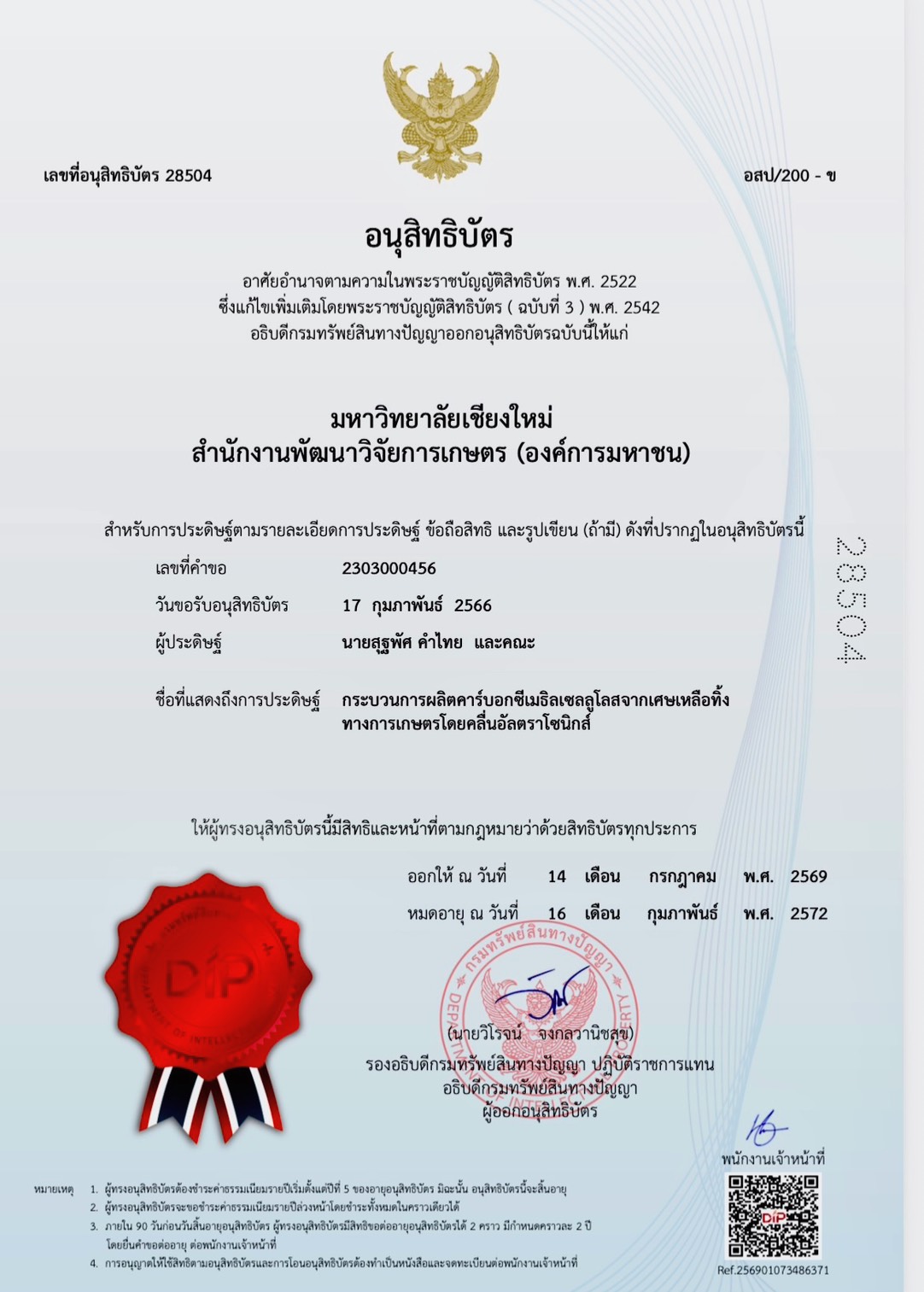
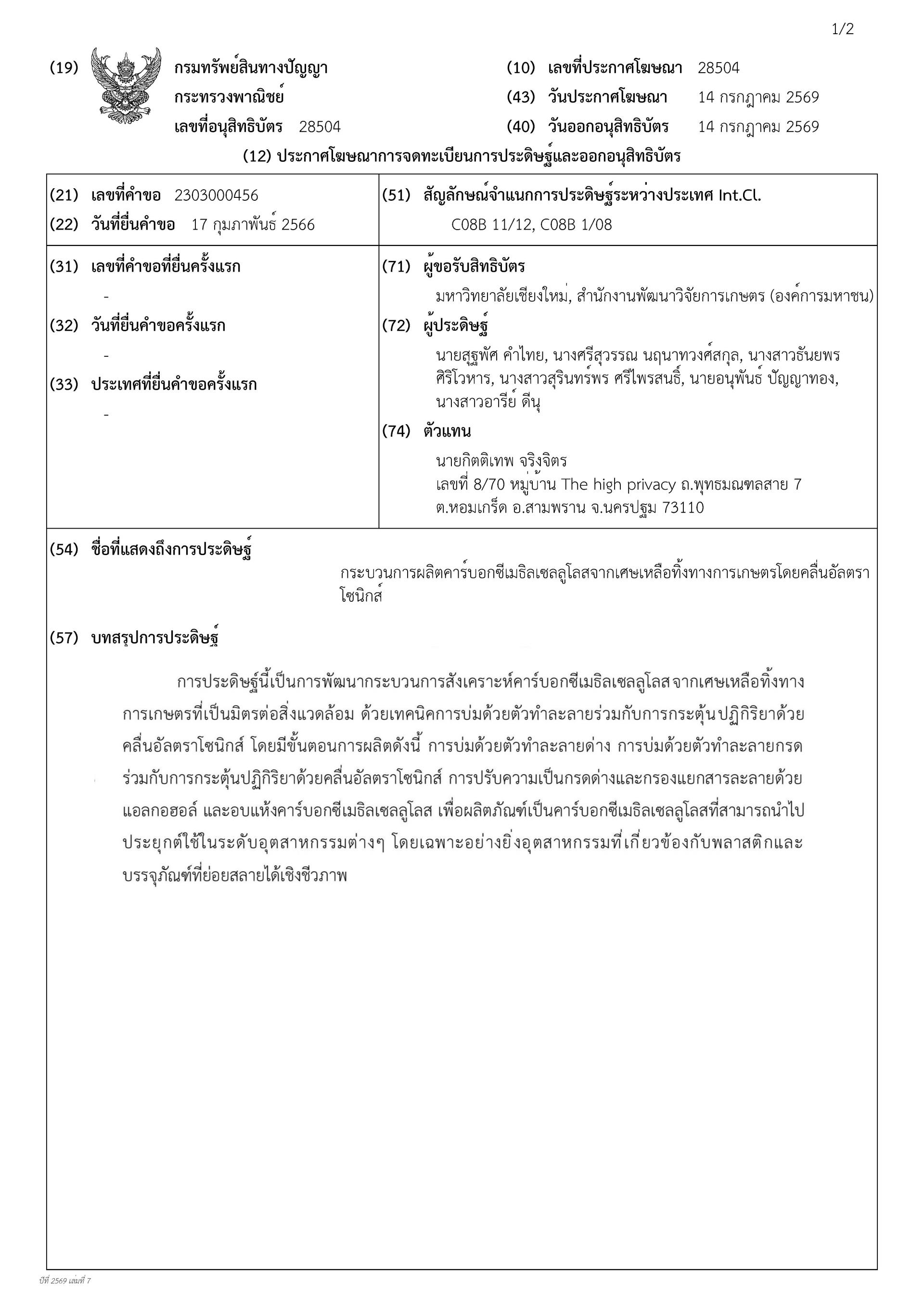
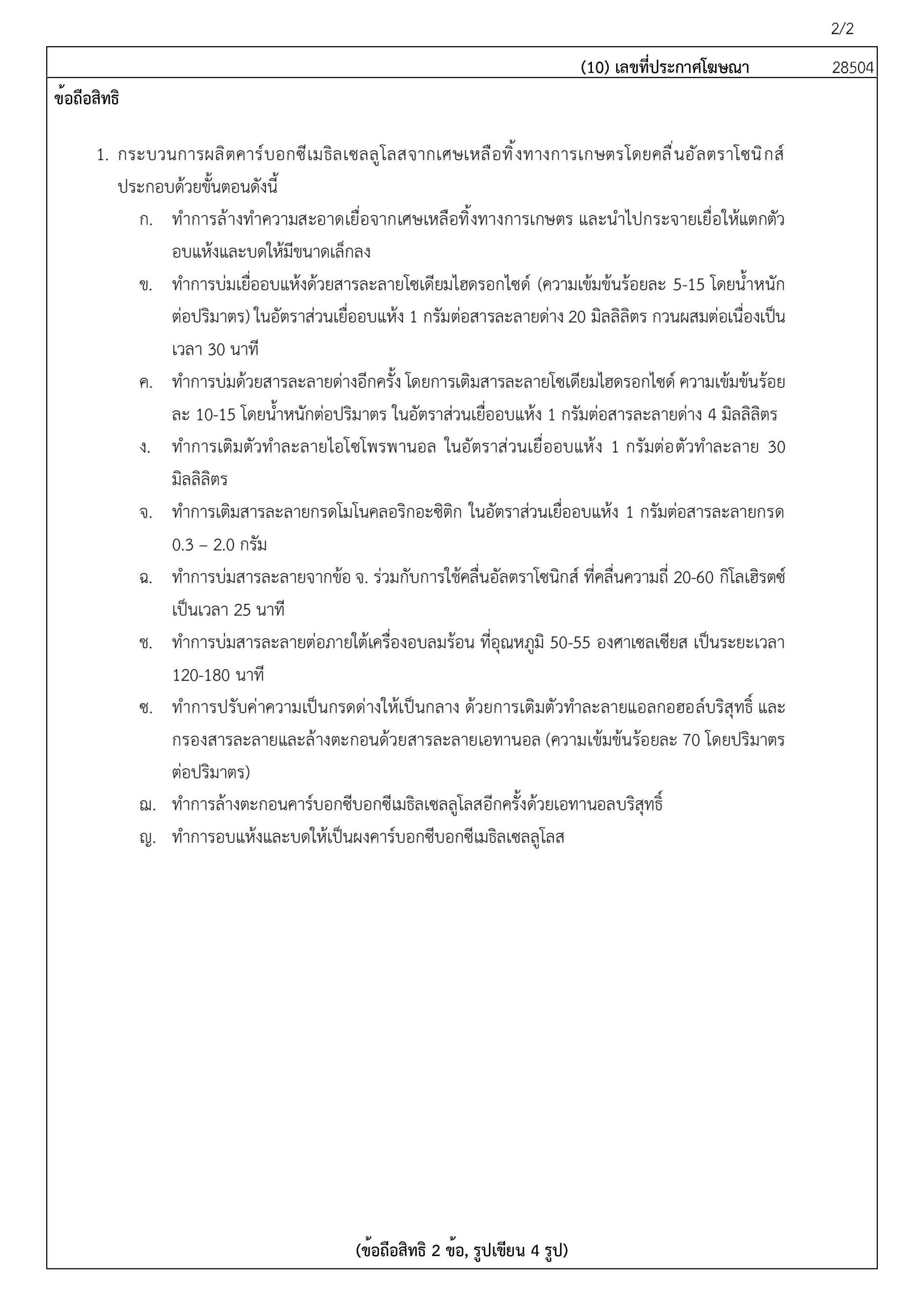
The Faculty of Agro-Industry, Chiang Mai University, extends its warmest congratulations to Asst. Prof. Suthaphat Kamthai and his research team on being granted a utility model patent for their invaluable research work entitled "Process for Producing Carboxymethyl Cellulose from Agricultural Waste by Ultrasonic Waves" (under patent application number 2303000456, filed on February 17, 2023), which is a joint collaboration between Chiang Mai University and the Agricultural Research Development Agency (Public Organization) (ARDA).
List of Inventors
Asst. Prof. Dr.Suthaphat Kamthai Asst. Prof. Dr.Srisuwan Naruenartwongsakul
Asst. Prof. Dr.Thanyaporn Siriwoharn Miss Surinporn Sripraison Mr. Anupan Panyathong
Miss Aree Deenu
Connecting Innovation to Sustainable Development Goals (SDGs)
This research achievement not only brings great pride to the institution but also plays a crucial role in driving Thailand and the global community toward the United Nations Sustainable Development Goals (SDGs) across multiple dimensions:
SDG 9: Industry, Innovation and Infrastructure
This represents the elevation of research and industrial production technology development through innovative ultrasonic wave applications, which help enhance production efficiency, develop substitute materials, and establish a green innovation foundation for the country.
SDG 12: Responsible Consumption and Production
It addresses the concept of the Circular Economy by taking agricultural waste—which is typically disposed of by burning or left to waste—and recycling it into value-added products, thereby maximizing natural resource utilization and reducing waste from the agricultural sector.
SDG 13: Climate Action
Transforming agricultural waste into high-value products such as carboxymethyl cellulose (CMC) helps mitigate open burning in the agricultural sector, which is a major cause of fine particulate matter (PM 2.5) and greenhouse gas emissions, thereby tangibly mitigating the impacts of climate change.
This success reflects the potential of Thai researchers in creating eco-friendly innovations while elevating Thailand's agricultural sector toward stable and sustainable growth.