Faculty of Agro-Industry, Chiang Mai University Congratulates Researchers on Receiving a Petty Patent for Rapid-Cooking Rice Innovation | คณะอุตสาหกรรมเกษตร มหาวิทยาลัยเชียงใหม่ : Faculty of Agro-Industry, Chiang Mai University, THAILAND
Faculty of Agro-Industry, Chiang Mai University Congratulates Researchers on Receiving a Petty Patent for Rapid-Cooking Rice Innovation
Awards and achievements
Jun 9, 2026
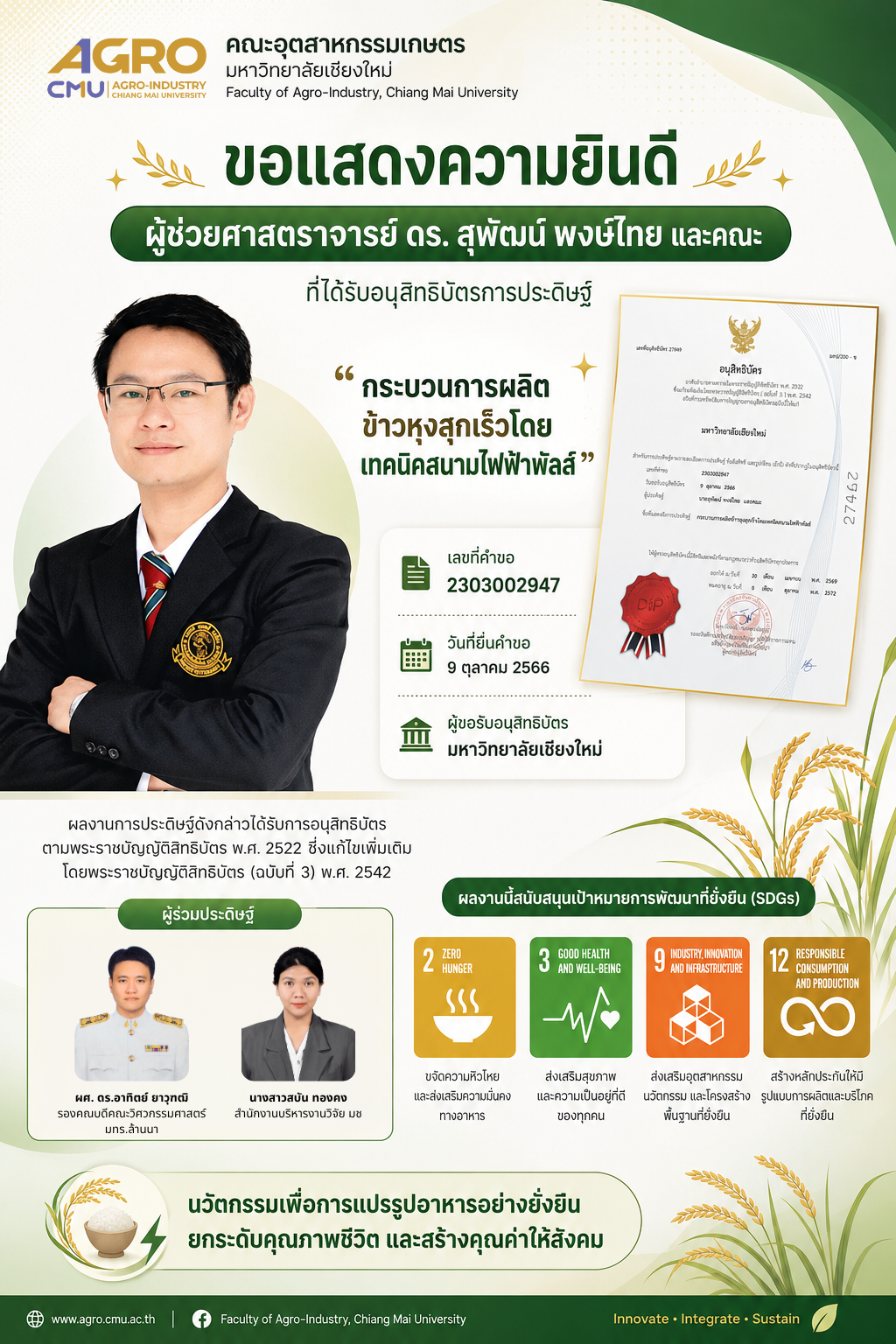
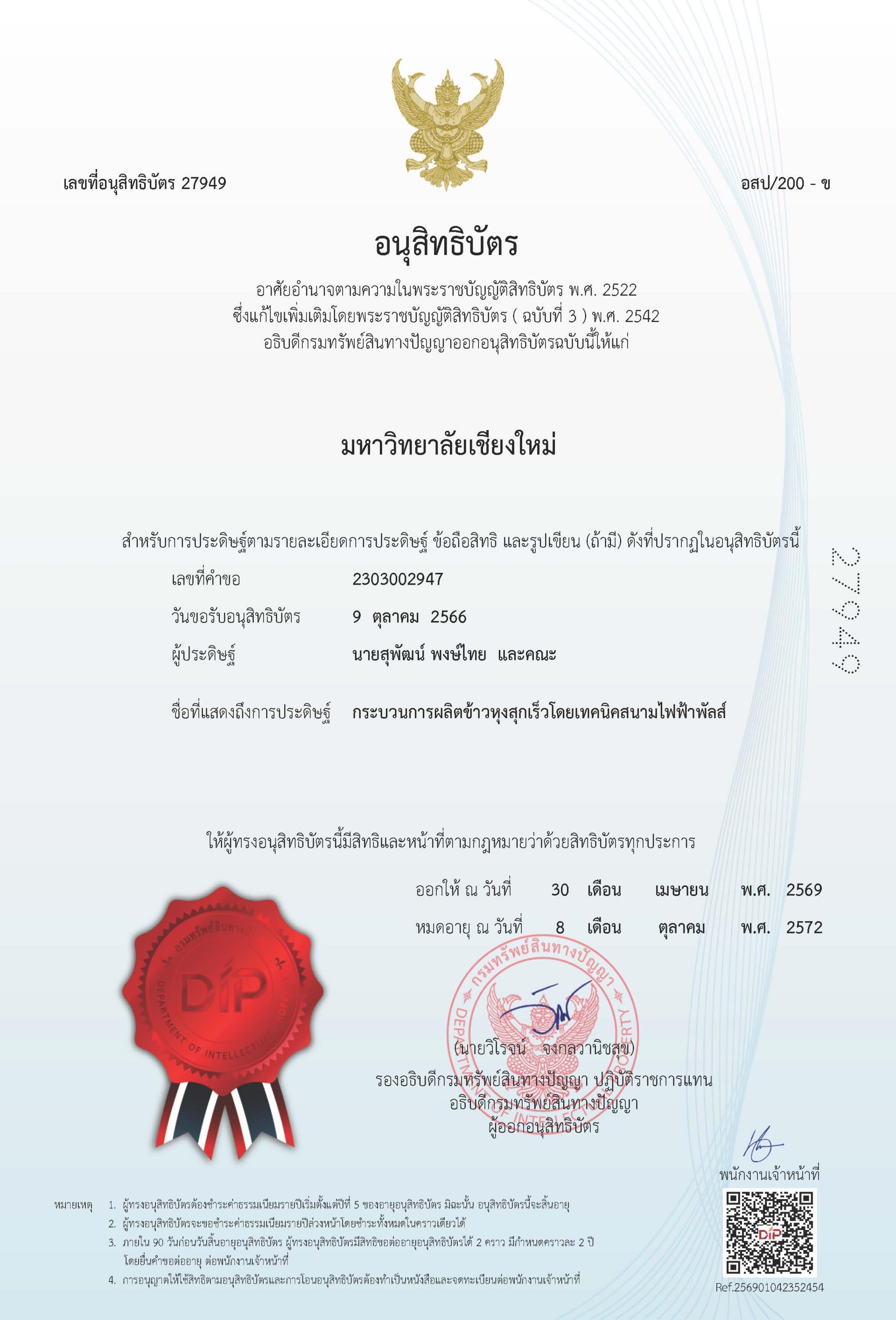
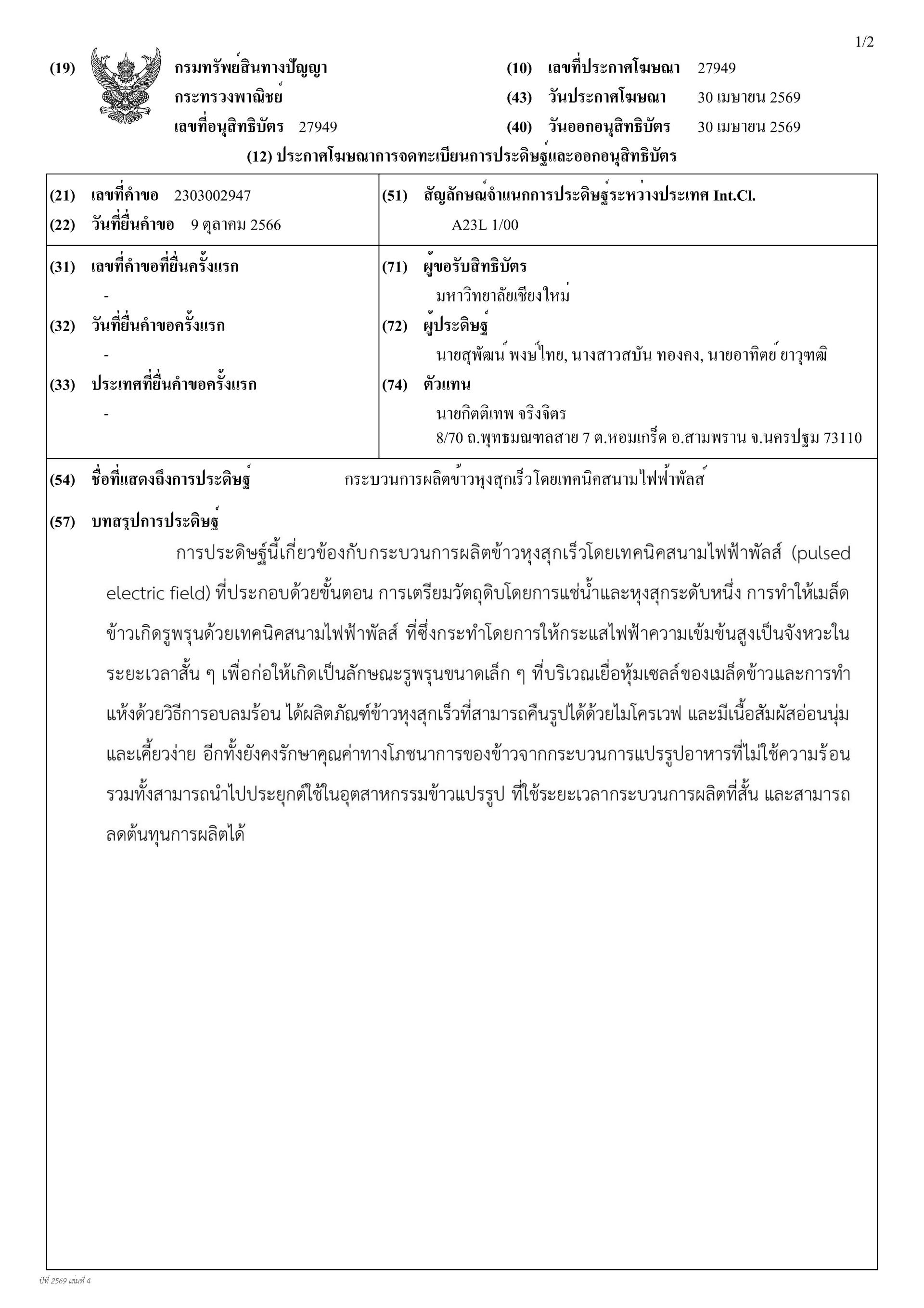
The Faculty of Agro-Industry, Chiang Mai University, extends its congratulations to Assistant Professor Dr. Suphat Phongthai, Ms. Saban Thongkong, and Assistant Professor Dr. Arthit Yaowutthi on being granted a Petty Patent for their invention entitled “Rapid-Cooking Rice Production Process Using Pulsed Electric Field Technology.”
The invention was filed under Patent Application No. 2303002947 on 9 October 2023 in the name of Chiang Mai University.
Innovative Solution for Rapid-Cooking Rice
This invention represents a significant advancement in food processing technology by addressing the limitations of conventional rapid-cooking rice production methods, which often require prolonged processing times or high-temperature treatments that may reduce nutritional value and vitamin content.
The research team applied Pulsed Electric Field (PEF) technology, a non-thermal food processing technique, to enhance the production of rapid-cooking rice. The technology works by delivering short pulses of high-intensity electric fields, inducing a phenomenon known as electroporation, which creates numerous microscopic pores in the cellular structure of rice grains.
These micro-pores facilitate faster water absorption during cooking, reducing cooking time by approximately 40–50% while maintaining the rice’s desirable texture, softness, and ease of chewing.
Contributing to the United Nations Sustainable Development Goals (SDGs)
Beyond its scientific and technological significance, this innovation supports several United Nations Sustainable Development Goals (SDGs):
SDG 2: Zero Hunger
The non-thermal PEF process helps preserve essential nutrients and vitamins in rice grains, contributing to improved nutritional quality and food security.
SDG 3: Good Health and Well-Being
The softer texture and easier chewability of the rice make it particularly suitable for older adults, supporting healthy aging and improving quality of life in an aging society.
SDG 9: Industry, Innovation and Infrastructure
The technology enhances the competitiveness of Thailand’s food and rice-processing industries by reducing production time and operational costs while promoting innovation.
SDG 12: Responsible Consumption and Production
By shortening processing and cooking times, the innovation contributes to more efficient resource utilization and reduced energy consumption at both industrial and household levels.
The Faculty of Agro-Industry, Chiang Mai University, remains committed to fostering impactful research and innovation that can be translated into practical applications, creating sustainable value for Thailand’s food industry and the global community.