







Faculty activities
Sep 24, 2026

Loading...
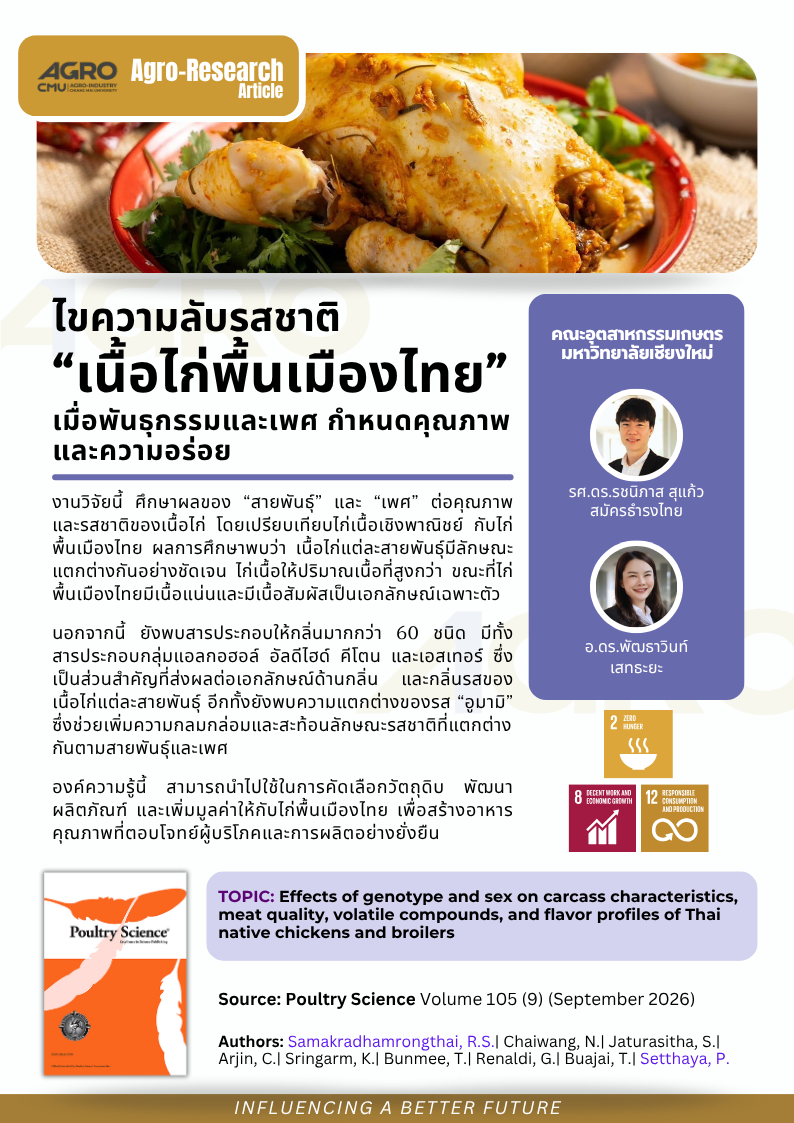
This study investigated the effects of genotype and sex on chicken meat quality and flavor by comparing commercial broilers with Thai native chickens. The results revealed clear differences among chicken genotypes. Commercial broilers produced higher meat yields, while Thai native chickens exhibited firmer texture and distinctive meat characteristics.
In addition, more than 60 volatile compounds were identified, particularly alcohols, aldehydes, ketones, and esters, which contribute to the unique aroma and flavor characteristics of different chicken genotypes. Differences in umami taste were also observed among genotypes and sexes, contributing to the richness of flavor and reflecting distinct taste characteristics associated with different chicken groups.
These findings can be applied to raw material selection, product development, and value creation for Thai native chickens, supporting the production of high-quality food products that meet consumer demands while promoting sustainable food production.
Topic: Effects of genotype and sex on carcass characteristics, meat quality, volatile compounds, and flavor profiles of Thai native chickens and broilers
Authors: Samakradhamrongthai, R.S.| Chaiwang, N.| Jaturasitha, S.| Arjin, C.| Sringarm, K.| Bunmee, T.| Renaldi, G.| Buajai, T.| Setthaya, P.
Abstract:
Chicken meat is widely consumed worldwide due to its versatility and nutritional value. This study evaluated the effects of genotype and sex on carcass characteristics, physicochemical properties, volatile organic compounds (VOCs), and flavor profiles of chicken meat from commercial broilers (CB) and two Thai native breeds, Pradu Hang Dam (PDHD) and Mae Hong Son (MHS). Carcass percentage did not differ among groups; however, genotype and sex significantly influenced carcass yield and organ development, with CB exhibiting superior growth performance. Physicochemical traits varied by muscle and genotype, with thigh muscle showing higher pH and greater tenderness, while native breeds produced darker meat. VOC analysis revealed distinct profiles among genotype–sex groups. MHS females were associated with butanoic acid and butan-2-one, contributing to buttery and cheesy notes, whereas MHS males were characterized by aldehydes, alcohols, and diketones, including trans-4,5-epoxy-(E)-2-enal, 1-hexen-3-ol, and butane-2,3‑dione. In CB group, female breast muscle showed higher levels of Maillard-derived compounds such as furfural and 3-furanthiol, while PDHD samples were associated with ester compounds, particularly methyl dodecanoate. Principal component analysis clearly separated groups, indicating that genotype and sex influence VOC formation through lipid oxidation and amino acid metabolism. Overall, genotype and sex play key roles in shaping meat quality and flavor-related chemical profiles, with implications for breeding and value-added product development.
Source: Poultry Science Volume 105 (9) (September 2026)
Keywords: Thai native chickens; Carcass traits; Meat quality; Volatile compounds; Flavor profile
View at publisher:
https://www.sciencedirect.com/science/article/pii/S003257912600773X?via%3Dihub